


Four years ago, Elon Musk brought a man in a spandex suit on stage and called it a robot.
Critics rolled their eyes. Journalists trashed him. Headlines screamed “misdirection,” “tomfoolery,” and “digital duct tape.”
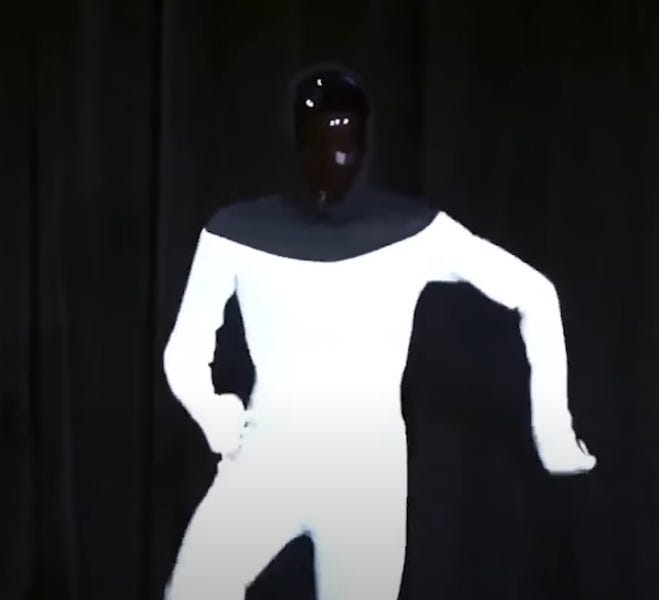
But they missed something big.
Tesla wasn’t trying to impress with a prototype. They were broadcasting intent—with just enough misdirection to stay ahead of the noise.
And today, that intent just danced across the internet.
🤖 From Spandex to Simulation
Remember the 2021 reveal? Musk walked onstage after the fake robot, said Optimus would be Tesla’s biggest product ever, and was instantly eviscerated by the media.
“Just a piece of concept art.”
“Held together by digital duct tape.”
“Tomfoolery.”
“Misdirection.”
But here’s what they missed:
Tesla had already solved the hard part.
Not the robot. The brain.
Tesla’s self-driving cars were already robots—with neural networks navigating the real world in real time. I know, because I’ve ridden in them.
Optimus isn’t a robot learning how to think. It’s a robot powered by an existing thinking system trained on billions of data points and edge cases.
And now, it can dance.
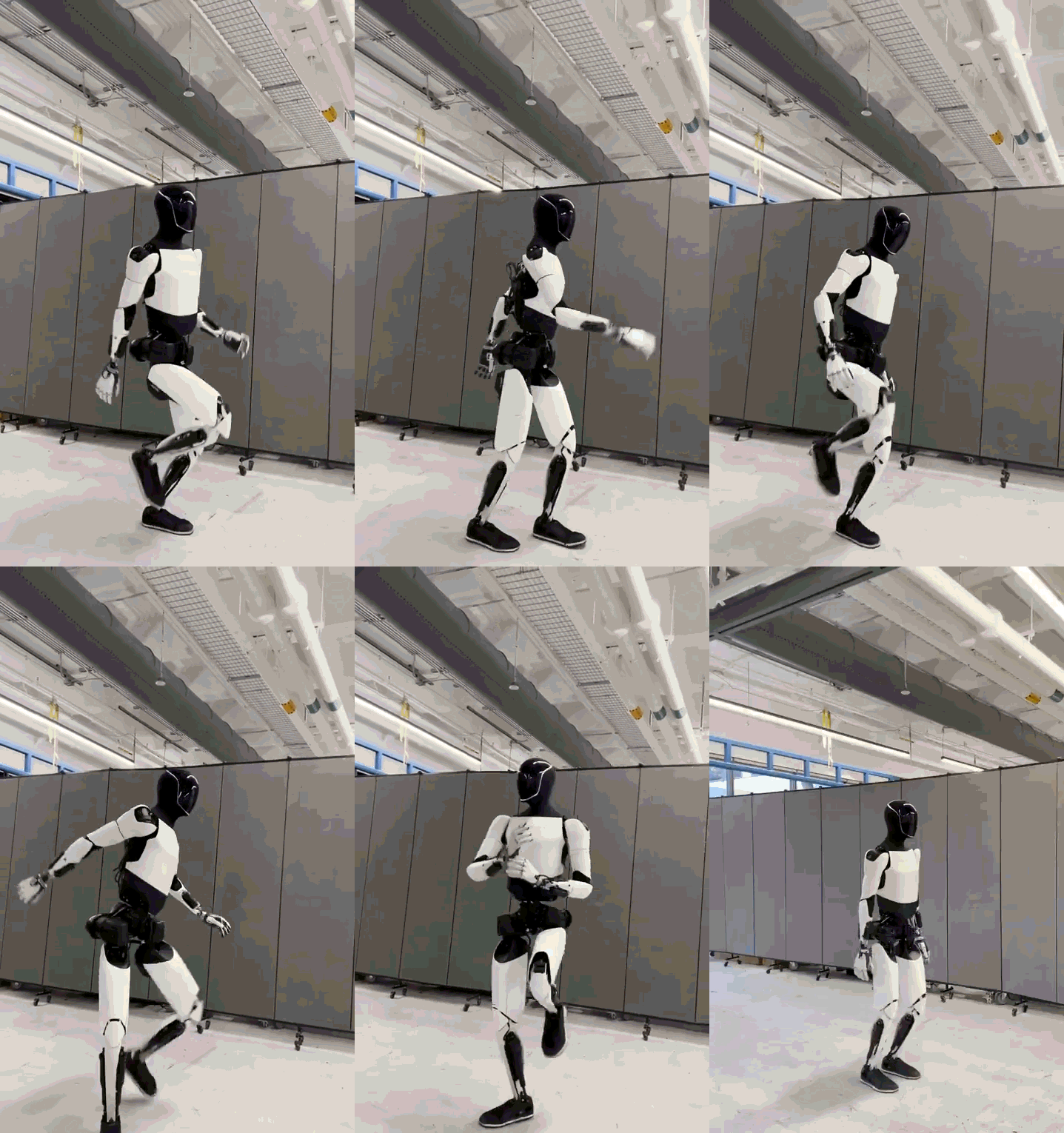
And yes—every move was learned in a virtual environment and transferred into the real world without additional training.
No wires. No actors. No BS.
But…
🤯 Even If It Only Bends, Lifts, and Twists...
That alone would unlock one of the biggest economic revolutions of our lifetime.
Because what’s hiding inside ordinary warehouses, fulfillment centers, and loading docks across America?
Trillions of dollars of economic value—trapped inside cardboard boxes.
And the only way to extract it…
Is through physical labor.
Moving boxes from shelves to trucks
Lifting components into place
Sorting, stacking, staging
Replacing the muscle that's aging out of the workforce
The real labor shortage isn’t about truck drivers or fast food workers—it’s the collapse in able-bodied industrial labor.
And Elon’s robots don’t need to master cooking, plumbing, or Shakespeare.
If all they do is bend, lift, and twist… they win.
And so does America.
💥 Enter Tesla 2.0
If Tesla can deliver even a basic humanoid robot at scale—one that replaces a $140,000/year labor cost for $90,000...
They won’t just dominate the robotics space.
They’ll become it.
Goldman Sachs projects demand could hit 1.5 million units annually by 2035.
At $80K gross profit per bot, a 100 P/E valuation gives us...
$12 TRILLION in potential valuation—more than 10x Tesla's current size.
And this doesn’t even include battery storage, robotaxis, or Tesla’s AI stack.
⏳ And the Timing? Perfect
Wall Street is not pricing this in.
They're still stuck on Musk’s showmanship.
They think this is just a flashy toy.
They’re wrong.
Optimus is not a gimmick—it’s the future of labor.
And it’s coming faster than the world is prepared for.
🚨 Tesla is not the play… For the Full Story and 3 Under-the-Radar Picks that will benefit the most keep reading
We’ve put together a complete breakdown of this $12 trillion opportunity:
✅ Why Tesla’s Optimus could be more valuable than EVs and batteries combined
✅ The 3 “picks and shovels” set to soar as the humanoid robot revolution begins
✅ A strategic game plan for positioning before Wall Street catches on
👇 Click below to watch the full video briefing now:
👉 Watch the Tesla 2.0 Briefing Now
Dustin Pass
CEO, Market Traders Daily
